Beef
Beef
 Bison
Bison
 Chicken
 Lamb
Lamb
 Pork
Pork
 Seafood
 Turkey
 Bundles


How Much Meat to Build Muscle (2026 Guide)
Find out exactly how much meat you need to build muscle in 2026 — portion sizes, cuts, weekly totals, and a practical step-by-step plan for hitting your protein targets.

If you're trying to build muscle and you eat meat regularly, the question isn't whether meat helps — it's how much you actually need, and which cuts make hitting your daily target practical.
TL;DR: To build muscle, most adults need 1.6–2.2 g of protein per kilogram of bodyweight per day, spread across 3–5 meals. For a 180 lb (82 kg) person, that's roughly 130–180 g of protein daily. Meat is one of the most efficient ways to hit that number — a 170 g (6 oz) serving of grass-fed ground beef delivers around 36 g of complete protein with all essential amino acids. Knowing how much meat to build muscle comes down to bodyweight, training intensity, and whether you're distributing intake evenly through the day.
Why this matters
Most people eating for muscle growth either under-eat protein early in the day and try to make it up at dinner, or they assume any amount of meat will do the job. Neither approach works well. Muscle protein synthesis responds to per-meal protein dose — specifically, studies published in the Journal of the International Society of Sports Nutrition (2017, position stand) set the evidence-based range at 0.4 g/kg per meal, consumed across at least 4 meals, to maximize anabolic response. Getting that right means planning your meat portions deliberately, not just eating more at random.
What you'll need
- A kitchen scale (portion accuracy matters — eyeballing 150 g vs. 200 g is a 10–15 g protein swing)
- Your bodyweight in kilograms (divide pounds by 2.2)
- A consistent protein source per meal — beef, chicken, bison, or pork all qualify
- Freezer space: buying in bulk and freezing keeps cost and prep time manageable in 2026
- A rough weekly meal plan so you're not improvising portions at 6 pm
The steps
Step 1: Calculate your daily protein target
Multiply your bodyweight in kg by 1.6 for a minimum target, and by 2.2 for a ceiling if you're training hard 4–5 days per week. A 75 kg person needs 120–165 g of protein per day. Write that number down — it's the only number that actually governs how much meat you need.
Don't use body weight if you're significantly overweight; use lean mass or a target bodyweight instead, or the number inflates well past what's useful.
Step 2: Divide your target across 4 meals
Spread your daily protein across 4 eating occasions, aiming for 30–45 g per meal. This isn't just a scheduling preference — muscle protein synthesis has a ceiling per meal of roughly 40 g for most adults, after which additional protein in that sitting offers diminishing returns. Four meals of 35 g each outperforms one 140 g dinner, even if the daily total is identical.
Common mistake: skipping breakfast protein entirely, then eating a 300 g steak at dinner and wondering why progress stalls.
Step 3: Match meat portions to your per-meal target
Here's where the practical math lives. Raw meat yields less after cooking — expect roughly a 25% reduction in weight. Use these reference points for raw portions:
| Meat | Raw portion | Cooked protein (approx.) |
|---|---|---|
| Grass-fed ground beef (regular) | 170 g (6 oz) | 36 g |
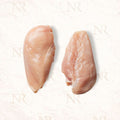
| Organic chicken breast | 175 g (6.2 oz) | 38 g |
| Extra lean grass-fed ground beef | 170 g (6 oz) | 38–40 g |
| Bison ribeye steak | 180 g (6.3 oz) | 37 g |
| Pork loin chops | 200 g (7 oz) | 36 g |
For a 75 kg person targeting 35 g per meal, a 170–180 g raw portion of beef or chicken hits the mark. Scale up proportionally for heavier bodyweights.
Step 4: Choose cuts that fit your weekly structure
Not every meal needs to be a steak. Ground beef and boneless chicken thighs are faster to prep and easier to portion accurately than bone-in cuts. Steak nights can anchor two or three meals per week while ground formats handle the rest.
For 2026 meal prep specifically, vacuum-sealed and flash-frozen portions eliminate the guesswork about freshness — you pull exactly what you need and the rest stays frozen. Northern Raised ships grass-fed and pasture-raised cuts vacuum-sealed, so you can keep a 4–6 week supply in the freezer without quality loss.
Common mistake: defaulting entirely to chicken breast because it's lean, then stalling on flavour and skipping meals. Rotating beef, bison, and pork keeps compliance higher over a 12-week training block.
Step 5: Account for training days vs. rest days
On training days, aim for the upper end of your range (2.0–2.2 g/kg). On rest days, 1.6–1.8 g/kg is sufficient — muscle repair continues after the session, but total demand is modestly lower. The difference for a 75 kg person is roughly 15–25 g per day, or about one extra 100 g portion of chicken or beef on hard training days.
This isn't a reason to complicate the plan. If hitting 1.8 g/kg consistently is where you are right now, stay there. Consistency across weeks matters more than optimizing the rest-day ceiling.
Step 6: Track for two weeks, then adjust by results
Weigh your portions raw for two weeks and log total daily protein. Most people discover they've been hitting 80–90 g per day rather than 130+ g. Once you have a real baseline, you can see exactly where the gaps are — typically breakfast and lunch — and add one targeted portion to each.
Expected outcome: within 3–4 weeks of consistent intake at 1.6 g/kg+, recovery between sessions should improve noticeably. Strength numbers typically respond over 6–8 weeks.
Common mistake: tracking for three days, deciding it's too much effort, and going back to guessing. The two-week investment pays off for the rest of the training year.
Step 7: Scale total meat volume to your weekly shop
In 2026, buying in bulk weekly is more cost-efficient than shopping per meal. For a 75 kg person eating 4 protein meals per day across 7 days, you need roughly 28 portions of 170 g raw meat per week — approximately 4.75 kg of raw meat total. That includes all protein sources, not just beef. A practical split might be 2 kg ground beef, 1.5 kg chicken, and 1.25 kg of a rotating option (bison, pork, steak).
The lean protein trio at Northern Raised is structured around exactly this kind of rotating weekly protein split and covers the variety needed to stay consistent without repeating the same meal every night.
Step 8: Don't over-index on protein at the expense of total calories
Muscle growth requires a caloric surplus or at minimum caloric maintenance. Hitting 160 g of protein per day in a 400-calorie deficit produces poor results — you'll preserve muscle but add very little. In 2026, the cleaner approach is protein at 1.8 g/kg, total calories at maintenance plus 200–300 kcal, and let the training stimulus do the rest.
Meat contributes both protein and calories (fat content varies significantly by cut), so factor the full macronutrient profile, not just the protein number.
Troubleshooting
You're hitting protein targets but not gaining muscle: Check total calories first. Protein sufficiency doesn't override a caloric deficit. Also check distribution — if 70 g comes at dinner, the earlier meals aren't driving synthesis effectively.
You feel full before hitting your portion: Switch to leaner, lower-volume cuts. Extra lean ground beef and chicken breast deliver more protein per gram of food weight than fattier cuts, making it easier to eat enough without feeling overfull.
You're bored of the same cuts every night: Add bison to the rotation — it's leaner than beef (typically 2–3 g fat per 100 g vs. 8–10 g for regular ground beef) with a slightly different flavour profile. Ground bison swaps directly into any ground beef recipe.
Portion tracking feels unsustainable: Pre-portion raw meat into zip bags before freezing. Pulling a labelled 175 g portion is faster than weighing every morning. This takes 20 minutes once per week.
You're not recovering between sessions: Check sleep and total calories before assuming protein is the issue. If both are adequate and you're still under 1.6 g/kg protein, that's the lever to pull.
Meat quality is inconsistent from the grocery store: Grass-fed and pasture-raised cuts have a more consistent fat profile than conventionally raised meat, which matters for hitting your macro targets reliably. Hormone- and antibiotic-free sourcing also removes variables you don't want when you're trying to isolate what's working in a training programme.
Tools and resources
- Kitchen scale: non-negotiable for the first two weeks
- Grass-fed ground beef — reliable daily driver, easy to portion, cooks in under 10 minutes
- Freezer inventory list: keep a running count of what's stocked so you don't run short mid-week
- Protein tracking app (Cronometer or MacroFactor both have solid Canadian food databases for 2026)
- A consistent delivery schedule so your freezer doesn't empty on week three of a training block
What to do next
Once your daily protein is dialled in for 2026, the next question is meal timing around training — specifically pre- and post-workout protein windows, where the cut and fat content of the meat starts to matter more. The article on grass-fed ground beef for high-protein diets covers how to match cut choice to specific training goals.
FAQ
How much meat do I need to eat to build muscle? For most adults, 1.6–2.2 g of protein per kilogram of bodyweight per day is the evidence-based range. A 170 g raw portion of grass-fed beef provides roughly 36 g of protein, so a 75 kg person needs 3–5 meat-sized portions daily depending on training intensity.
Is it better to eat more meat at once or spread it throughout the day? Spread it. Muscle protein synthesis responds to per-meal dose, not daily totals alone. Aim for 30–45 g of protein per meal across 4 meals — one large dinner cannot compensate for low intake earlier in the day.
What cut of beef has the most protein per 100 g? Extra lean ground beef and eye of round are among the highest at roughly 22–24 g protein per 100 g raw. Fattier cuts like ribeye deliver less protein per gram of food weight because fat displaces protein content.
Can I build muscle eating chicken instead of beef? Yes. Organic chicken breast delivers 38+ g of protein per 175 g raw portion, comparable to ground beef. The amino acid profiles of chicken and beef are both complete. Rotating both keeps micronutrient variety higher — beef provides more iron and zinc, chicken breast provides less saturated fat.
How much does meat quality matter for muscle building? The protein content is similar between conventional and grass-fed beef, but grass-fed cuts have a better omega-6 to omega-3 ratio, which affects systemic inflammation and recovery. For someone training 4–5 days per week in 2026, lower chronic inflammation means better recovery between sessions.
Is bison a good protein source for muscle growth? Bison is excellent — it averages 2–3 g of total fat per 100 g compared to 8–10 g for regular ground beef, while delivering comparable protein (roughly 22 g per 100 g raw). The lower fat content makes it easier to stay in a moderate caloric surplus rather than overshooting.
How much meat per week does a serious lifter actually need? For a 80 kg person training 4 days per week, targeting 1.8 g/kg daily: roughly 144 g protein per day. If half comes from meat, that's 72 g protein from meat per day, or about 340 g raw meat daily — roughly 2.4 kg raw meat per week, across all species.
Does freezing meat affect its protein content? No. Flash-freezing preserves protein content and amino acid profile intact. Vacuum-sealed frozen meat is nutritionally equivalent to fresh for the purposes of hitting protein targets.
One last thing
Beef liver is the most overlooked muscle-building food in most meal plans. A 100 g serving delivers roughly 20 g of protein alongside the highest concentration of bioavailable zinc of any common food — zinc directly supports testosterone production and muscle protein synthesis. One 100 g portion per week adds meaningful micronutrient density to a muscle-focused diet without competing with your main protein portions. Most people who try it weekly notice faster recovery within 3–4 weeks, which is a reasonable 2026 experiment for anyone serious about training results.